
Direct Consultation
"The 2026 migration landscape is complex. Our Brisbane team simplifies the pathway for skilled professionals."
Check Eligibility Now
"The 2026 migration landscape is complex. Our Brisbane team simplifies the pathway for skilled professionals."
Check Eligibility NowTo secure an Australian family visa in 2026, you must navigate specific streams for partners, parents, or children. Most pathways involve a two stage process starting with a temporary permit that transitions to permanent residency after meeting residency and relationship milestones. Success requires meeting strict health, character, and relationship evidence standards set by the Department of Home Affairs.
Australian family visas enable citizens, permanent residents, or eligible New Zealanders to sponsor relatives (such as partners, children, and parents) for residency. Primary categories include partner, child, and parent streams, which typically necessitate formal sponsorship, health and character clearances, and documented proof of the relationship. Applications are managed through ImmiAccount or via paper forms, with timelines varying by visa type.
Partner Visas (Permanent and Temporary):
Designed for spouses or de facto partners.
Specific pathways for those applying from outside Australia (subclass 309/100).
Pathways for those applying from within the country (subclass 820/801).
Child Visas (Subclass 101/802):
Provides a pathway for children to reside permanently with their parents in Australia.
Covers biological, adopted, and eligible step-children.
Parent Visas (Permanent and Temporary):
Options range from the Contributory Parent (subclass 143) which involves higher costs for faster processing.
Aged Parent (subclass 804) for those of Australian pension age.
Temporary Sponsored Parent (subclass 870) allowing for stays up to 10 years without permanent residency.
Additional Family Visas:
Specialised categories exist for Carers (subclass 836/116).
Remaining Relatives (subclass 835/115) for those with no other family outside Australia.
Aged Dependent Relatives (subclass 114/838) for single older relatives.
Sponsorship:
A qualified relative must formally support the applicant.
Sponsors must be Australian citizens, permanent residents, or eligible NZ citizens.
Sponsorship now often requires approval before or alongside the visa lodgement.
Submission Methods:
Most applications are handled digitally through ImmiAccount.
Certain categories, such as some child or “Other Family” visas, still utilise paper-based applications sent by post.
General Requirements:
Applicants must pass health and character assessments (police checks).
Must provide documented evidence of a legitimate, ongoing relationship.
Parent visas must satisfy the “balance of family” criteria.
Wait Times:
Subject to annual caps on available spots set by the federal budget.
Many streams, particularly non-contributory parent and other family visas, are subject to significant, multi-decade processing queues.
Visitor visa (subclass 600) – Sponsored Family Stream:
Allows relatives to visit Australia for periods ranging from 3 to 12 months.
Can be granted for up to 3 to 5 years for parents of citizens/residents.
Requires a bond in some instances to ensure the visitor departs on time.
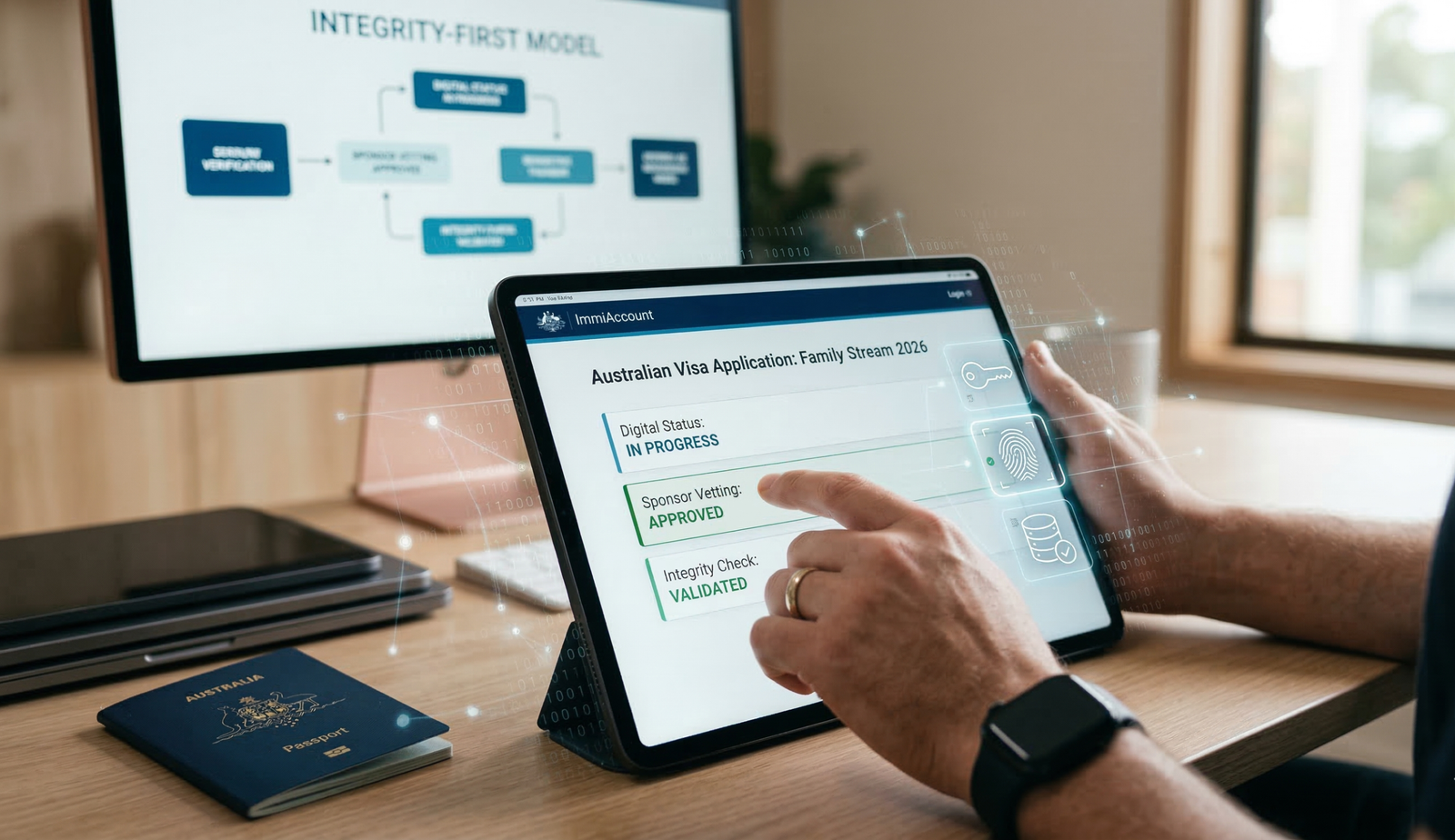
Navigating the Australian migration system in 2026 requires a high degree of technical accuracy and digital savvy. The Department of Home Affairs has shifted its focus toward an integrity-first model, which means that applications are scrutinized more heavily than ever before for consistency across various data platforms. While the goal remains family reunification, the path to achieving it is paved with stringent checks and balances designed to prevent fraud and ensure that only genuine families are granted residency.
In the current year, the migration program has set specific planning levels that directly influence how quickly your visa can be processed. For 2025–26, the government has allocated significant places for the partner stream to minimise backlogs, but parent and “other family” streams remain subject to strict caps. This environment makes it vital for applicants to be “decision-ready” upon lodgement a term that refers to applications where all evidence, health checks, and police clearances are provided immediately, allowing a case officer to make a decision without having to ask for more information.
Digital Transformation: The transition to ImmiAccount is nearly complete for all streams. Even legacy paper-based subclasses like the Child (101) or Remaining Relative (115) visas now utilise digital tracking systems.
Sponsorship Reform: The “Sponsor Approval” process has become more independent. Sponsors are now assessed for their own history of compliance and character before the visa applicant’s case moves forward.
Priority Processing: While there is no “fast-track” fee, the Department prioritises applications from regional areas or those that involve high-integrity documentation.
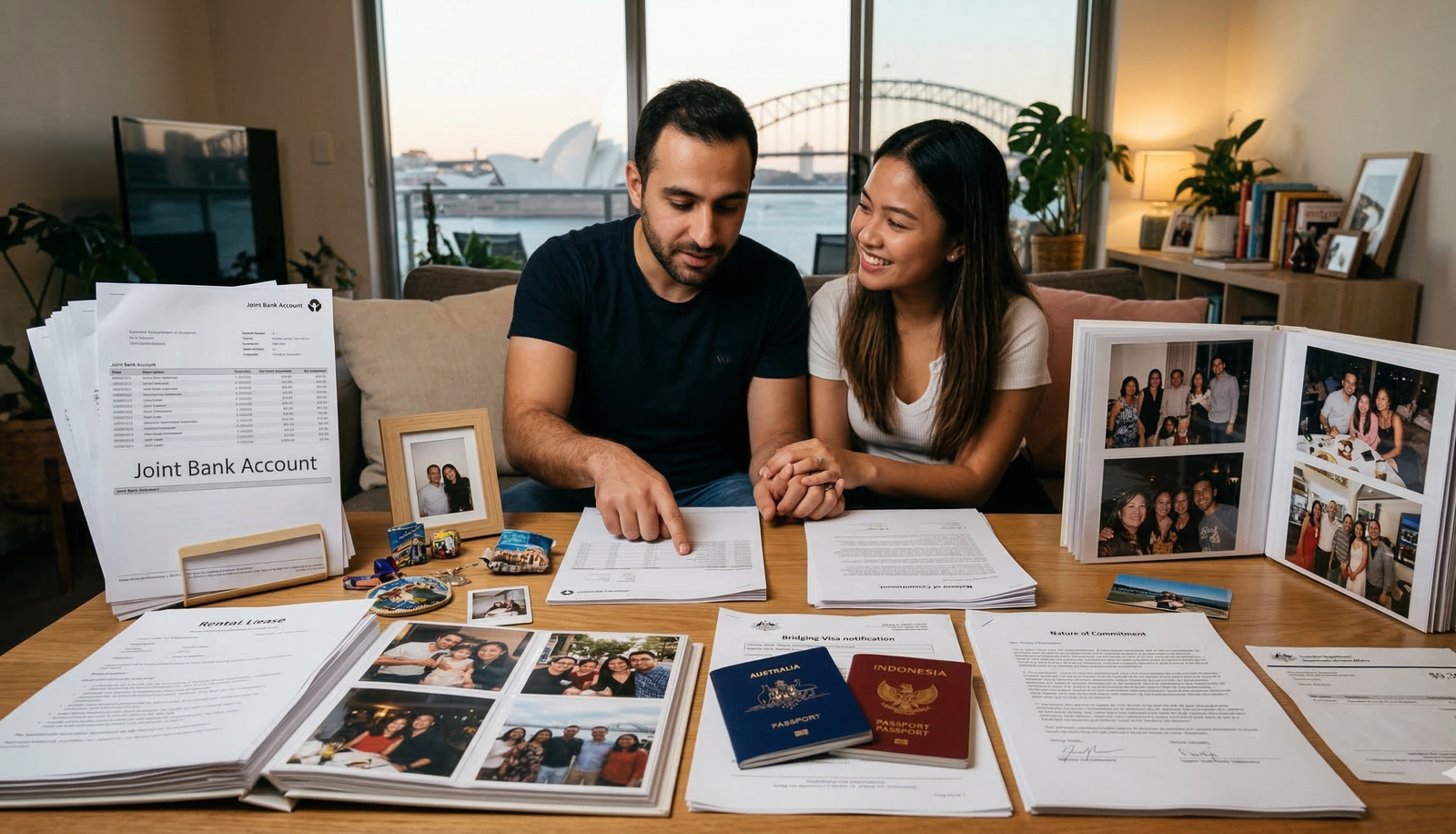
Partner visas are the most common route for family migration, but they are also the most document-intensive. Whether you are married or in a de facto relationship, the burden of proving that your relationship is “genuine and continuing” rests entirely on you. In 2026, the cost of a partner visa application has risen to approximately $9,365, reflecting the extensive administrative work required to verify these complex applications.
The choice between applying onshore or offshore is a strategic one that affects your rights while the visa is processing.
Onshore (820/801): This is for couples already together in Australia. Upon lodgement, the applicant is granted a Bridging Visa A (BVA), which usually includes full work rights and Medicare access. This allows the couple to remain together throughout the 12 to 24 month waiting period.
Offshore (309/100): If the applicant is outside Australia, they apply for the 309. The primary advantage of the 309 in 2026 is that it is often processed slightly faster than the onshore version as the Department works to clear international backlogs.
A successful partner visa in 2026 must be built on the “Four Pillars” of relationship evidence. Each pillar must be supported by high-quality, verifiable documents.
Financial Aspects: You must show how you manage money together. This includes joint bank accounts showing regular household transactions, joint ownership of assets (like a car or home), and legal commitments like being each other’s beneficiary for superannuation or life insurance.
Nature of the Household: This pillar examines your daily life. Documents such as joint leases, utility bills in both names, and even a “nature of the household” statement explaining how you share chores and grocery shopping are essential.
Social Aspects: How does the community see you? You should provide invitations to social events addressed to you as a couple, photos of you with family and friends across the span of your relationship, and travel records showing joint holidays.
Nature of Commitment: This focuses on the future and the history of your bond. It includes your personal statements about how you met, your knowledge of each other’s personal lives, and your plans for a long-term future in Australia.
The 2026 parent migration program is a study in trade-offs. The Department offers several pathways, but each comes with either a high financial cost or an exceptionally long waiting time. Understanding the “Balance of Family” test is the first step: to be eligible, at least half of the parents’ children must live permanently in Australia.
The Contributory Parent visa is the most realistic pathway for those who want permanent residency within their parents’ lifetime.
Financial Commitment: The total cost per parent is roughly $48,640. This is paid in two stages: a base application fee at the start and a large “second instalment” just before the visa is granted.
Processing Time: While still subject to a queue, these are currently taking between 12 and 15 years a far cry from the 30+ years of the non-contributory stream.
Assurance of Support (AoS): A bond of $10,000 (for one parent) or $14,000 (for two) must be lodged with the government for 10 years to cover any potential social security claims.
For families who cannot pass the Balance of Family test or do not want to wait 15 years for PR, the Subclass 870 is a popular alternative in 2026.
Stays of 3 or 5 Years: This visa allows parents to stay for extended periods (up to 10 years total) without needing to leave Australia every three months.
No PR Pathway: It is important to note that the 870 does not lead to permanent residency, but it is processed in months rather than years.
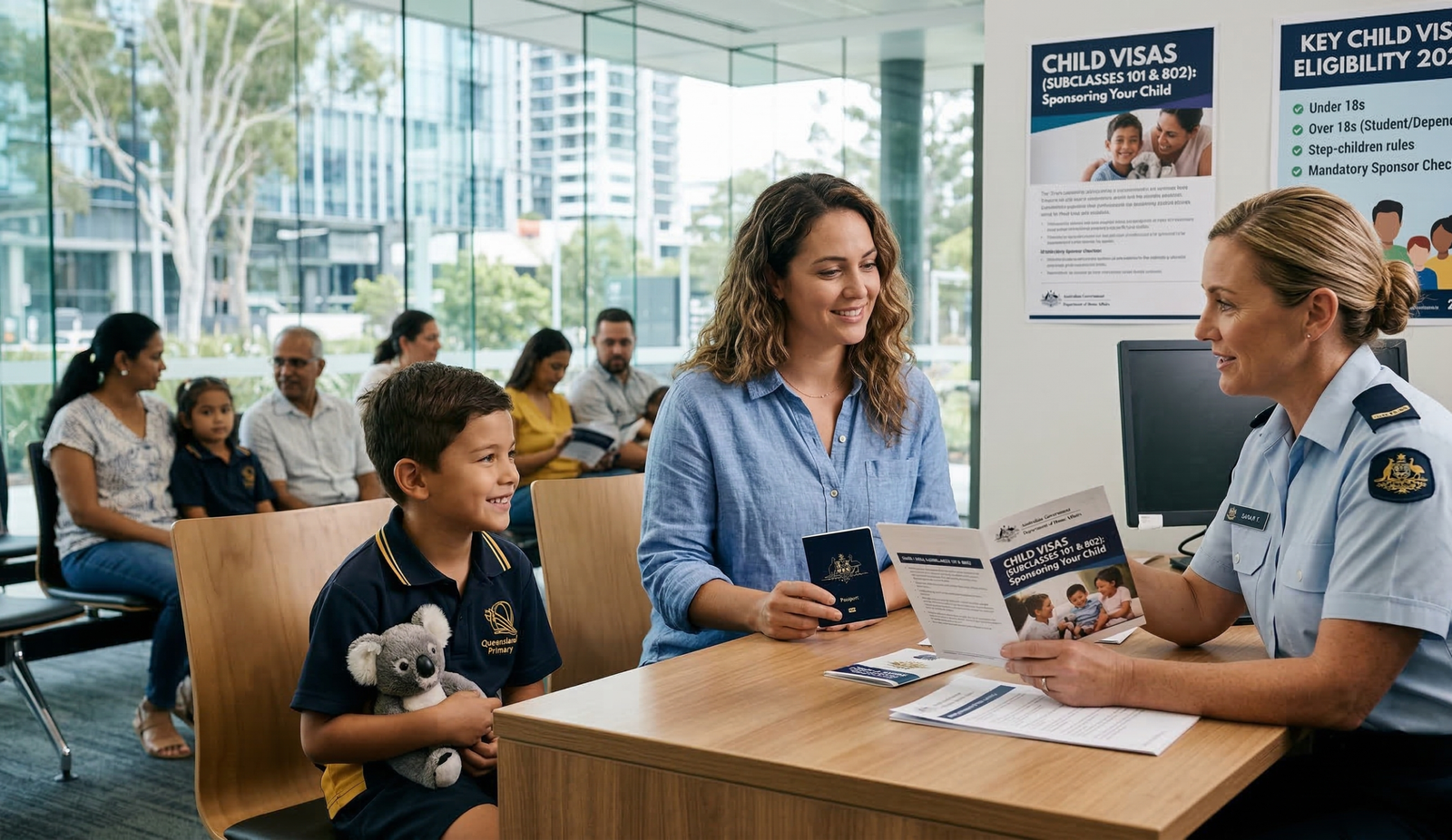
The child visa program ensures that children of Australian citizens or permanent residents can live in Australia indefinitely. In 2026, the Department has streamlined the processing for biological children, but adoption and step-child cases remain complex.
Under 18s: The process is relatively straightforward for children under 18. The focus is primarily on the sponsor’s ability to provide and the best interests of the child.
Over 18s (up to 25): To be eligible, the child must be a full-time student and financially dependent on the parent. They cannot be in a de facto relationship or married.
Step-children: A step-child can only be sponsored if the sponsor is no longer the partner of the child’s parent but has a legal parenting order or guardianship.
The Department now performs mandatory character checks on the sponsor to protect children from harm. If a sponsor has a “registrable offence” or a history of certain crimes, the sponsorship and therefore the visa may be refused. This highlights the government’s 2026 priority of child safety within the migration stream.
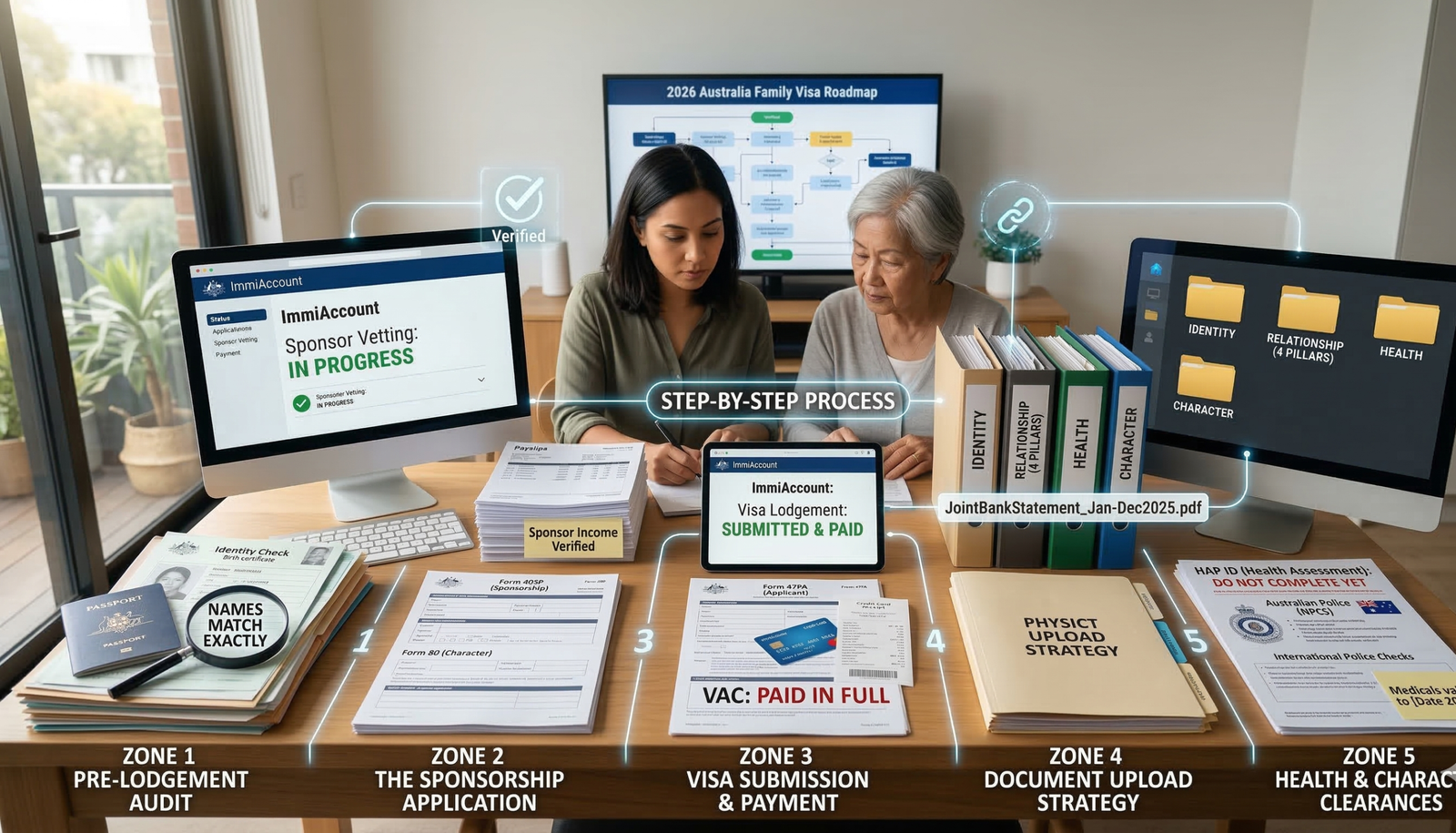
A successful family visa application in 2026 is a marathon, not a sprint. Following a structured process is the only way to manage the hundreds of pages of documentation required.
Phase 1: Pre-Lodgement Audit: Before you even open ImmiAccount, you must conduct an audit of your identity documents. Ensure your names match exactly across passports, birth certificates, and marriage certificates. In 2026, even minor discrepancies can lead to identity verification delays.
Phase 2: The Sponsorship Application: The Australian sponsor must submit their own application first. This includes providing proof of their “settled” status in Australia and undergoing police checks. The Department now scrutinizes the sponsor’s income more closely for certain streams like the Parent (870) visa.
Phase 3: Visa Submission and Payment: Once the sponsorship is underway, the applicant submits the main visa form and pays the Visa Application Charge (VAC). It is crucial to pay the full amount; underpayment can result in an invalid application.
Phase 4: Document Upload Strategy: Don’t just dump documents into the portal. Organize them into clear folders: Identity, Relationship (the Four Pillars), Health, and Character. Use descriptive file names like JointBankStatement_Jan-Dec2025.pdf to help the case officer navigate your case.
Phase 5: Health and Character Clearances: Do not complete medicals or police checks until requested, or unless you are certain of your processing timeline. These documents usually only last 12 months, and if they expire before a case officer looks at your file, you will have to pay for them again.
According to migration specialists at Intel Migration, administrative errors are the number one cause of visa delays in 2026.
Many applicants believe that a marriage certificate is enough to prove a relationship.
The Reality: The Department requires a history of your life together. A marriage certificate only proves a legal event, not a genuine relationship.
The Fix: Provide a variety of evidence. Combine social photos with dry financial data like superannuation beneficiary forms and joint electricity bills.
If you are applying as a de facto couple, you must show you have lived together for at least 12 months before the date of application.
The Fix: If you haven’t lived together for a year, you should register your relationship with your State or Territory government. This “waives” the 12-month requirement, though you still need to prove the relationship is genuine.
Case officers are trained to look for discrepancies. If the sponsor’s statement says you moved in together in January, but the applicant’s says March, it triggers a “Request for Information” (RFI) or an interview.
The Fix: Sit down with your partner and create a “master timeline” of your relationship before drafting your statutory declarations. Intel Migration recommends having a professional review these statements for consistency.
[ ] Passport Validity: Ensure your passport has at least 12 months left. Renewing a passport mid-process is possible but adds administrative complexity.
[ ] Sponsor Eligibility: Proof that the sponsor is an Australian citizen, PR holder, or eligible New Zealand citizen.
[ ] Relationship Timeline: A clear, chronological narrative of your relationship, signed by both parties.
[ ] Statutory Declarations (Form 888): At least two declarations from Australian citizens who can verify your relationship.
[ ] Financial Interdependence: Joint bank account statements for the last 6 to 12 months.
[ ] Nature of Household: Shared lease, mortgage, or letters of support from family if you live with them.
[ ] Police Clearances: Obtained for every country you’ve lived in for a total of 12 months or more over the last 10 years.
[ ] Health Assessment: Completed through Bupa Medical Visa Services (onshore) or an approved panel physician (offshore).
[ ] NAATI Translations: Every document not in English must be translated by a NAATI-accredited professional.
How long does a partner visa take in 2026?
As of early 2026, most Subclass 820 (Onshore) visas are being decided within 12 to 22 months. Subclass 309 (Offshore) visas are slightly faster, often coming in between 10 and 18 months for straightforward cases.
Can I work in Australia while my visa is processing?
If you apply for an onshore partner visa, your Bridging Visa A typically comes with “nil conditions,” meaning you have full work and study rights once your previous visa (like a tourist or student visa) expires.
What is the “Balance of Family” test?
It is a requirement for parent visas that stipulates at least half of your children must live permanently in Australia, or more of your children live in Australia than in any other single country.
How much does the contributory parent visa cost now?
In 2026, the total cost per parent is approximately $48,640, plus the Assurance of Support bond and medical costs.
Do I need to be married to get a partner visa?
No. You can apply as a de facto couple, provided you can prove you have lived together for at least 12 months or have registered your relationship with an Australian state government.
Can I travel while my visa is being processed?
If you are onshore, you must apply for a Bridging Visa B (BVB) before leaving Australia. If you leave on a Bridging Visa A, you will not be able to return to Australia on that visa.
What is an Assurance of Support (AoS)?
It is a legal commitment where a person (the assurer) agrees to repay the government for any social security benefits the applicant might claim during their first 10 years in Australia.
What happens if my partner visa is refused?
You can usually appeal the decision to the Administrative Review Tribunal (ART). However, there are very strict deadlines (often 21 days), so you must act quickly.
Is there a limit on how many people I can sponsor?
An Australian citizen can generally only sponsor two partners for a visa in their lifetime, and those sponsorships must be at least five years apart.
Can I get Medicare while waiting for my visa?
Onshore partner visa applicants are eligible for Medicare as soon as they have lodged a valid Subclass 820 application and have been granted a Bridging Visa.
What is a Form 888?
A Form 888 is a statutory declaration used by the Department to get evidence from “third parties” (friends and family) about the genuineness of your relationship.
Can I include my children in my partner visa?
Yes, you can include dependent children as “secondary applicants.” They will need to meet the same health and character standards as the primary applicant.
What is the “Long Term Relationship” provision?
If you have been in a relationship for 3 years (or 2 years with a child together), the Department may grant both the temporary and permanent partner visas at the same time.
How do I prove a de facto relationship if we don’t have a joint lease?
You can use other evidence like being listed as “permitted occupants,” joint utility bills, or statutory declarations from your landlord or the family members you live with.
Do I need a migration agent?
While not a legal requirement, using a specialist like Intel Migration can significantly reduce the risk of refusal, especially for complex cases involving previous refusals or health issues.
Securing an Australian family visa in 2026 is a journey that demands patience, precision, and a deep understanding of the law. While the Department of Home Affairs continues to modernise its processes, the standard of proof remains exceptionally high. Whether you are bringing a partner, a child, or a parent to Australia, your success depends on your ability to tell your family’s story through a clear, well-documented, and “decision-ready” application.
At Intel Migration, we specialise in taking the stress out of this process. Our team of experts understands the nuances of the 2026 migration landscape and is committed to ensuring that your family’s future in Australia is built on a solid foundation. We don’t just fill out forms; we build cases that withstand the scrutiny of case officers.
If you are ready to unite your family in Australia, the team at Intel Migration is ready to lead the way.
Contact us today to book your comprehensive strategy session and take the first step toward your Australian residency.
*The information in this article is provided for general informational purposes only and does not constitute immigration assistance or legal advice under the Migration Act 1958 (Cth). While reasonable efforts are made to ensure accuracy at the time of publication, Australian migration law and policy are subject to frequent change, and this content may not reflect the most current requirements. Nothing in this article establishes a client relationship with Intel Migration or any of its registered migration agents. Readers should not act or refrain from acting based on this content without first seeking personalised advice from a registered migration agent regarding their individual circumstances. Intel Migration, its agents, and employees accept no responsibility or liability for any loss, damage, or consequence arising from reliance on the information contained in this post.