
Direct Consultation
"The 2026 migration landscape is complex. Our Brisbane team simplifies the pathway for skilled professionals."
Check Eligibility Now
"The 2026 migration landscape is complex. Our Brisbane team simplifies the pathway for skilled professionals."
Check Eligibility NowIn 2026, Australia’s employer-sponsored visa landscape is defined by increased salary requirements and streamlined, “decision-ready” processing. Starting 1 July 2026, the Core Skills Income Threshold will be adjusted upward. The new Skills in Demand (Subclass 482) visa is now the primary framework, offering prioritised pathways for essential sectors like healthcare and education.
Income Thresholds (Effective 1 July 2026): The Core Skills Income Threshold (CSIT) will rise to $79,499 AUD. Meanwhile, the Specialist Skills Income Threshold will increase to $146,717 AUD.
Skills in Demand (SID) Visa: This four-year framework is now fully active, designed to provide a more efficient and straightforward migration pathway.
Processing Timelines: Applications submitted as “decision-ready” receive priority handling. The goal is 7 business days for the Specialist Skills stream and 21 business days for the Core Skills stream.
Subclass 407 Training Visa Overhaul: As of 11 March 2026, the application order has been formalised; employers must have their sponsorship and nomination approved before a visa application can be lodged.
Labour Market Testing (LMT): Mandatory requirements remain in place to ensure local recruitment efforts are exhausted before hiring from abroad.
Temporary Skill Shortage (Subclass 482): Now integrated into the Skills in Demand visa structure.
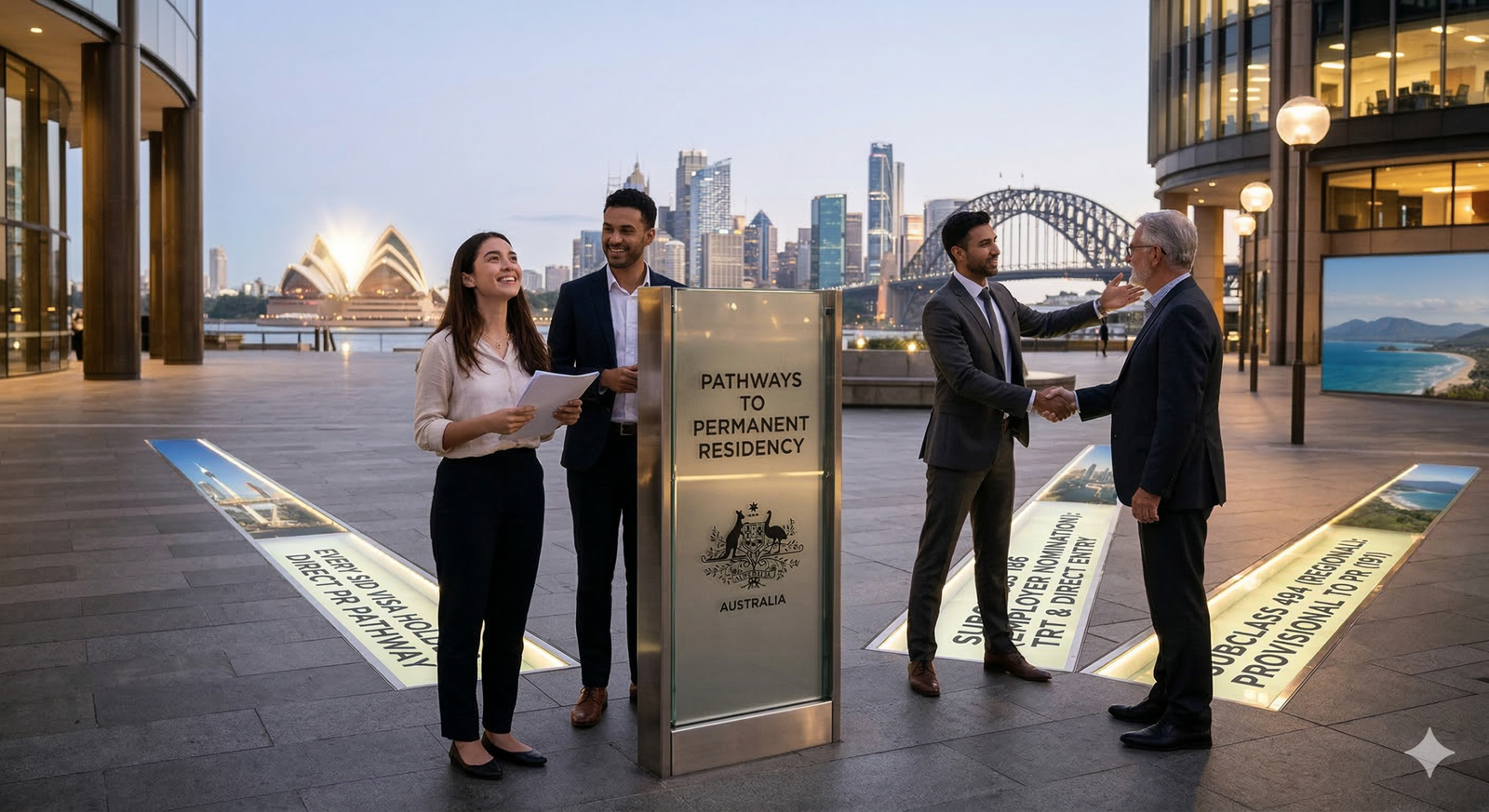
Employer Nomination Scheme (Subclass 186): A direct route to permanent residency.
Skilled Employer Sponsored Regional (Subclass 494): A provisional visa option specifically for businesses in regional Australia.
Financial Planning: Businesses must revise their payroll budgets to align with the higher 2026 salary minimums.
Regulatory Compliance: The Department of Home Affairs has increased audit frequency, making strict adherence to sponsorship duties essential.
DAMA (Designated Area Migration Agreements): These specialised regional agreements remain an option, though they require an initial endorsement from a Designated Area Representative (DAR).

For Brisbane businesses and international professionals, staying ahead of these regulatory changes is no longer optional it is a baseline requirement for successful recruitment and residency. As we navigate the complexities of the new Skills in Demand (SID) framework and rising income thresholds, partnering with experts like Intel Migration ensures your applications are not just submitted, but strategically positioned for approval.
One of the most critical updates for 2026 is the annual indexation of salary floors. Following the release of the Australian Bureau of Statistics’ Average Weekly Ordinary Time Earnings (AWOTE) data, the Department of Home Affairs has confirmed the following increases:
| Threshold Category | Current Rate (pre-July 2026) | New Rate (Effective 1 July 2026) |
| Core Skills Income Threshold (CSIT) | $76,515 AUD | $79,499 AUD |
| Specialist Skills Income Threshold (SSIT) | $141,210 AUD | $146,717 AUD |
These thresholds apply strictly to guaranteed annual earnings. Employers cannot include superannuation, non-monetary benefits like housing or car allowances, or performance-based bonuses to meet these minimums. Furthermore, the Annual Market Salary Rate (AMSR) remains a secondary hurdle: if an Australian worker in the same role earns $95,000, you cannot pay a sponsored worker the $79,499 minimum; you must match the $95,000 market rate.

The Skills in Demand visa has fully matured in 2026 as the replacement for the old TSS 482 system. It is designed to be more flexible, acknowledging that modern workers value mobility.
One of the biggest hurdles of the old system was being “tied” to a single employer. In 2026, SID visa holders now have up to 180 days to find a new sponsor if their employment ends. During this period, they retain full work rights. a major departure from the 60-day limit of previous years. This allows talent to remain in Australia while finding a better fit, reducing the “permanent temporariness” that plagued the old system.
To manage the diverse needs of the economy, the visa is split into three distinct streams:
Specialist Skills Stream: For high-earners (over $146,717) in any occupation except trades.
Core Skills Stream: For workers on the Core Skills Occupation List (CSOL) earning between the CSIT and SSIT.
Essential Skills Stream: Reserved for specific sectors under Labour Agreements, such as aged care.
The 2026 system rewards preparation. The Department has moved to a “Standardised Processing” model backed by a new digital tracking platform. To hit the target windows of 7 days (Specialist) or 21 days (Core), applications must be “decision-ready.”
This means all police checks, health examinations (HAP ID), and English test results must be attached at the time of lodgement. In 2026, an AI-driven triage layer now checks for document completeness immediately; if core evidence is missing, the application is automatically flagged for manual review, losing its priority status.
As of 11 March 2026, the Department introduced an urgent change to the Training (Subclass 407) visa. Historically, sponsorship, nomination, and visa applications could be lodged simultaneously. Under the new regulations, the order is strictly sequential:
Sponsorship Approval: The employer must be an approved Temporary Activities Sponsor.
Nomination Approval: The training program itself must be approved by the Department.
Visa Lodgement: Only once both approvals are granted can the applicant lodge their visa.
This change is designed to stop “visa hopping” and ensure that only genuine training opportunities are supported. For onshore applicants, this means you must hold a valid substantive visa while waiting for these approvals, as a Bridging Visa is only issued once a valid visa application is lodged.
LMT remains a mandatory integrity measure. Employers must prove they have genuinely tried to hire an Australian.
Duration: Ads must run for at least 28 consecutive days.
Recency: Advertising must have occurred within the 4 months prior to lodging a nomination.
Platforms: At least two national-reach platforms (e.g., SEEK, LinkedIn, or Workforce Australia) must be used.
Requirements: The ad must include the job title, duties, required skills/experience, the employer’s name, and the salary range (if the salary is below $96,400).
The 2026 reforms have democratised Permanent Residency (PR). Every SID visa holder now has a clear, non-discriminatory pathway to permanent residency, regardless of whether their occupation is on a “Short-term” or “Long-term” list.
The Subclass 186 is the primary route to Australian Permanent Residency. It features two main streams:
Temporary Residence Transition (TRT): For those who have worked for their sponsor for at least 2 years on a 482 or SID visa.
Direct Entry (DE): For skilled workers who may be offshore or have not worked for their sponsor yet. This requires a formal Skills Assessment and 3 years of relevant experience.
For businesses in regional Australia (most areas outside of Sydney, Melbourne, and Brisbane), the 494 visa offers access to over 650 occupations. It is a 5-year provisional visa that leads to PR via the Subclass 191 after living and working in the region for 3 years.
The 2026 CSOL is the foundational list for the Core Skills stream. Based on the 2025 National Occupation Shortage List, roughly 29% of assessed roles remain in acute shortage.
The Care Economy: Registered Nurses (Aged Care, ICU, Mental Health), Midwives, and Physiotherapists.
Digital & Tech: Cybersecurity Specialists, Software Engineers, and Data Scientists.
Infrastructure: Construction Project Managers, Civil Engineers, and Electricians.
Net Zero Transition: Specialists in renewable energy and sustainable infrastructure.
The Department of Home Affairs now uses Single Touch Payroll (STP) data matching with the ATO. This allows them to monitor in real-time whether a sponsored worker is actually receiving the nominated salary. Underpaying a worker or failing to meet superannuation obligations will trigger an automatic audit and potential barring from the sponsorship program.
Employers must budget for the Skilling Australians Fund (SAF) levy, paid at the nomination stage:
Small Business (<$10m turnover): ~$1,200 per year of the visa.
Large Business: ~$1,800 per year of the visa.
Standard Business Sponsorship (SBS): A business must apply to become a sponsor. SBS status lasts for five years.
Labour Market Testing (LMT): Concurrent with the SBS or immediately after, the employer must advertise the role. Screenshots of the ads must be taken on day 1 and day 28.
The Nomination: The employer nominates a specific person for a specific role. This is where the salary, the ANZSCO code, and the LMT evidence are assessed.
The Visa Application: The applicant lodges their part. In 2026, the focus is on identity, health, character, and skills.
1. What is the Core Skills Income Threshold for 2026?
As of 1 July 2026, the threshold is $79,499 AUD (base salary).
2. Can I switch employers on a 482 visa in 2026?
Yes. You have 180 days to find a new sponsor. You do not need a new visa, but the new employer must lodge a new nomination for you.
3. Is the Subclass 186 pathway open to everyone?
Yes, the 2026 reforms have expanded the 186 TRT stream to all SID visa holders who have worked for their sponsor for 2 years.
4. What changed with the 407 visa in March 2026?
You can no longer lodge the sponsorship, nomination, and visa at the same time. You must wait for the sponsorship and nomination to be approved first.
5. How long does a “Decision-Ready” visa take?
Specialist stream visas can be granted in as little as 7 business days.
6. Do I need a skills assessment for the SID visa?
Generally no for professional roles, but yes for many trade occupations (like Chefs, Electricians, or Mechanics).
7. Can my partner work?
Yes, secondary applicants on 482, 494, and 186 visas usually have full work rights.
8. What is the age limit for Permanent Residency?
The standard limit is 45 years, though some exemptions exist for regional roles or high-income earners.
9. Is Brisbane regional?
No, Brisbane is considered a major city. However, areas just outside the metropolitan fringe may be eligible for regional incentives.
10. What happens if my employer is audited?
The Department checks payroll records against the nomination. If the business is compliant, there is no risk to your visa.

[ ] Verify the business holds a valid SBS.
[ ] Run LMT for 28 days on two national platforms.
[ ] Ensure the contract meets the $79,499 or $146,717 minimums.
[ ] Draft a detailed Position Description linked to the correct ANZSCO code.
[ ] Take an English test (IELTS 6.0 for PR, 5.0 for SID).
[ ] Get a health check (HAP ID) early.
[ ] Request police clearances from all countries where you lived for 12+ months.
[ ] Ensure you have clear evidence of your qualifications and work history.
Navigating the 2026 migration landscape requires precision. At Intel Migration, we provide the expertise needed to navigate these shifts successfully.
Contact Us today at our West End office or call +61 402 043 744 to begin your assessment.